.png)

Gallatin Canyon Sewer Project Environmental Benefits
Protecting the Gallatin River While Supporting Responsible Growth
The Gallatin Canyon Sewer Project is a long‑term investment in water quality, public health, and community sustainability. The project replaces aging septic systems with centralized wastewater treatment to reduce nutrient loading to the Gallatin River and its underlying aquifer, while supporting smarter development in the canyon corridor. Connecting to central sewer is not just an infrastructure upgrade, it is a direct investment in the health of our water, our rivers, and our community.
Increasing Nutrient Loads and Population Growth
-
The Gallatin River is experiencing excessive summer algae blooms linked to excess nitrogen.
-
Gallatin River nitrogen concentrations roughly double in the canyon during summer low flows
-
During the environmentally sensitive baseflow period of July through September, the Gallatin River nitrogen load approximately doubles from upstream to downstream through the canyon area.
-
Onsite wastewater systems (septics) are a major part of the human-caused load in the canyon.
-
Planned development and area growth trends indicate that this problem will only increase without intervention
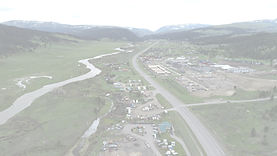


Environmental & Public Health Benefits
Protecting Water Quality Through Central Sewer
Measurable Reductions in Nitrogen Pollution
Connecting homes and businesses to a modern, centralized sewer system is one of the most effective ways to protect local groundwater and rivers, including the Gallatin River and its tributaries. While human sources make up a relatively small portion of nutrient loading across the entire watershed, providing a centralized alternate to septic systems is one of the main tools we have to reduce loads.
Existing onsite systems in the sewer planning area currently contribute about 3,500 pounds of nitrogen per year to the Gallatin River. The sewer project is expected to reduce this load by 25% - 50% by abandoning septic systems and connecting those properties to centralized treatment. The more existing properties that connect, the bigger the impact. This net nutrient reduction is achieved while serving the expected growth in the canyon and disposing of of some of BSCWSD's effluent in addition to existing canyon uses. Central sewer significantly lowers nutrient pollution overall and on a per‑person basis.

This is achieved with advanced treatment paired with a strategic mix of groundwater discharge and irrigation with treated effluent. Process reliability is also greatly improved in centralized versus small private systems.
Cleaner Effluent
The Membrane Bioreactor (MBR) treatment plant is designed to produce a maximum of 5 mg/L total nitrogen. This is cleaner discharge than most other public groundwater and surface water dischargers in the state and many times better than the average nitrogen coming out of existing systems in the canyon.
Effluent will also be disinfected - a major reduction to public health risks.
Turning Growth into an Asset
Growth is happening in the Gallatin Canyon. By planning for it, we can turn that growth into an asset rather than a challenge. A centralized sewer system allows for more compact, efficient development, creating opportunities for workforce housing and helping improve housing affordability. Concentrating growth in appropriate areas also helps reduce sprawl, protects open space, and makes infrastructure investments more cost-effective.
With today's customer base alone, funding a regional sewer system is challenging. As our community continues to grow, new development can help pay for the infrastructure needed to protect public health and the Gallatin River.
Why This Project Matters
Protecting the Gallatin River While Supporting Responsible Growth
The Gallatin Canyon Sewer Project is a long‑term investment in water quality, public health, and community sustainability. The project replaces aging septic systems with centralized wastewater treatment to reduce nutrient loading to the Gallatin River and its underlying aquifer, while supporting smarter development in the canyon corridor.
Gallatin Canyon is experiencing two converging challenges:
Increasing nutrient impacts
to the river and aquifer, including algae growth
Ongoing growth pressure
in an
environmentally sensitive
corridor
The sewer project addresses both by managing wastewater more effectively, protecting drinking water sources, and reducing long‑term environmental risk. The sewer will create net nutrient reduction, even with the expected growth.
To learn more: