.png)

Gallatin Canyon Sewer Project Environmental Benefits
Protecting the Gallatin River While Supporting Responsible Growth
The Gallatin Canyon Sewer Project is a long‑term investment in water quality, public health, and community sustainability. The project replaces aging septic systems with centralized wastewater treatment to reduce nutrient loading to the Gallatin River and its underlying aquifer, while supporting smarter development in the canyon corridor.

Environmental & Public Health Benefits
Wastewater‑Sourced Nitrogen
-
About 8% of nutrient loading in the Upper Gallatin watershed is human‑caused
-
Onsite wastewater systems (septics) contribute roughly 2.5% of total loading
-
Summer nitrogen concentrations increase significantly in the canyon, suggesting septic influence
-
Nitrogen is the primary nutrient of concern due to local soil and hydrology conditions


Protecting Water Quality Through Central Sewer
Why Central Sewer Matters for Our Environment
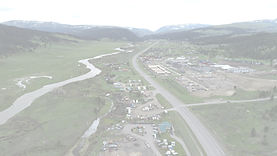
Connecting homes and businesses to a modern, centralized sewer system is one of the most effective ways to protect local groundwater and rivers, including the Gallatin River and its tributaries. While human sources make up a relatively small portion of nutrient loading across the entire watershed, wastewater from septic systems becomes a much more significant impact at the local scale, especially in the project area.
In the Project Area stem of the Gallatin, onsite wastewater treatment systems (septic systems) account for approximately 20% of the total nutrient load. Central sewer service directly addresses this localized impact by removing wastewater nutrients more efficiently and consistently than individual septic systems.

Measurable Reductions in Nitrogen Pollution
Existing onsite systems in the planning area currently contribute about 4,100 pounds of nitrogen per year to groundwater. Phase 1 of the sewer project would eliminate approximately 3,580 pounds of that existing nitrogen load annually by abandoning septic systems and connecting those properties to centralized treatment.
Although treated wastewater is still discharged, advanced treatment and controlled reuse significantly reduce the overall nutrient impact. Under conservative assumptions, Phase 1 results in a net reduction of about 7% in wastewater‑derived nitrogen loading to the aquifer, even while serving additional homes and planned development.
When surface water protection is considered, accounting for natural processes like dilution and denitrification, the benefits are even greater. Estimated reductions in nitrogen reaching the Gallatin River range from approximately 26% to over 50%, depending on site conditions and treatment performance.
Fewer Nutrients Per Person, Now and Into the Future
Central sewer dramatically lowers nutrient pollution on a per‑person basis:
-
Typical onsite systems can contribute 8.5 pounds of nitrogen per person per year, with even the best systems averaging more than 3.5 pounds per person
-
Centralized sewer collection and treatment reduces that to approximately 0.5 pounds per person per year reaching surface water
Over the next 20 years, areas without sewer service are projected to produce substantially higher nitrogen loads than sewered areas, even at lower population levels. Central sewer allows growth to happen with far less impact on water quality.
Cleaner Discharge Compared to Other Systems
The planned centralized system is designed to meet or outperform nutrient standards used by other wastewater facilities in the region. With a treatment goal of less than 5 mg/L total nitrogen, the central system provides cleaner discharge than several nearby groundwater and surface water dischargers, while serving the community at a local scale.
Environmental Benefits of Central Sewer in the Gallatin Canyon
Quick Stats
Up to 53% less nitrogen reaches the Gallatin
Connecting Phase 1 properties to central sewer is projected to reduce nitrogen loads to the Gallatin River by 27–53%, depending on natural denitrification conditions.
3,500+ pounds of nitrogen removed each year
By replacing onsite septic systems with central sewer, approximately 3,580 pounds of nitrogen per year from existing sources would be eliminated from the aquifer in Phase 1 alone.
90% less nitrogen per person
Central sewer reduces wastewater nitrogen contributions from up to 8.5 lbs per person per year (typical septic systems) to about 0.5 lbs per person per year reaching surface water, a reduction of over 90%.
Septic systems make up ~20% of local nutrient loading
While human sources are a small share of nutrients at the watershed scale, onsite wastewater systems contribute about 20% of total nutrient loading in the project area, making sewer conversion one of the most impactful local solutions.
Why This Project Matters
Protecting the Gallatin River While Supporting Responsible Growth
The Gallatin Canyon Sewer Project is a long‑term investment in water quality, public health, and community sustainability. The project replaces aging septic systems with centralized wastewater treatment to reduce nutrient loading to the Gallatin River and its underlying aquifer, while supporting smarter development in the canyon corridor.
Gallatin Canyon is experiencing two converging challenges:
Increasing nutrient impacts
to the river and aquifer, including algae growth
Ongoing growth pressure
in an
environmentally sensitive
corridor
The sewer project addresses both by managing wastewater more effectively, protecting drinking water sources, and reducing long‑term environmental risk. To learn more about the environmental benefits, click here.